
Mass timber can be a good choice for seismic zones, with both advantages and disadvantages to consider.
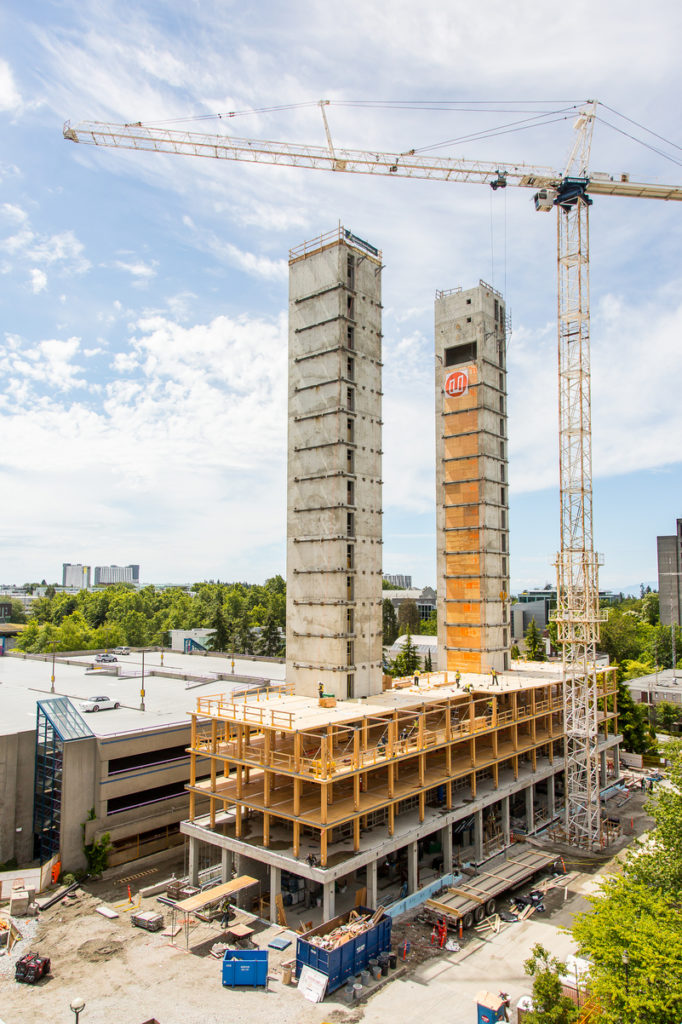
Advantages:
- Lightweight: Mass timber is significantly lighter than concrete and steel, which translates to lower seismic forces acting on the building during an earthquake. This can help to reduce damage and make the building more resilient.
- Ductility: Mass timber has some inherent ductility, meaning it can deform and flex under stress before breaking. This allows the building to absorb earthquake energy and resist cracking or collapse.
- Energy dissipation: Timber connections and structural elements can be designed to dissipate earthquake energy through friction and yielding, further protecting the building.
- Sustainability: Mass timber is a renewable and sustainable building material, making it an attractive choice for environmentally conscious projects.
Disadvantages:
- Limited experience: Mass timber is a relatively new technology for tall buildings in seismic zones, and there is less experience with its performance compared to traditional materials like concrete and steel.
- Brittle failure: While mass timber has some ductility, it can still experience brittle failure, meaning it can break suddenly without much warning. This is a concern in high-seismic areas.
- Connection design: Designing connections that are strong, ductile, and easy to repair after an earthquake is a critical challenge for mass timber buildings in seismic zones.
- Fire resistance: Mass timber requires additional fire protection measures to meet building codes in most areas.
Overall, mass timber can be a viable option for buildings in seismic zones, but careful consideration and engineering are necessary. Building codes are also evolving to address the specific challenges of mass timber in seismic design.
Here are some additional factors to consider:
- The specific seismic zone: The level of seismic risk in a particular area will influence the design requirements for a mass timber building.
- The type of mass timber product: Different types of mass timber products, such as cross-laminated timber (CLT) and glued laminated timber (glulam), have different properties and may be more or less suitable for seismic zones.
- The experience of the design team: It is important to choose a design team with experience in designing and building mass timber structures in seismic zones.
With careful planning and engineering, mass timber can be a safe and sustainable choice for buildings in earthquake-prone areas.



0 Comments